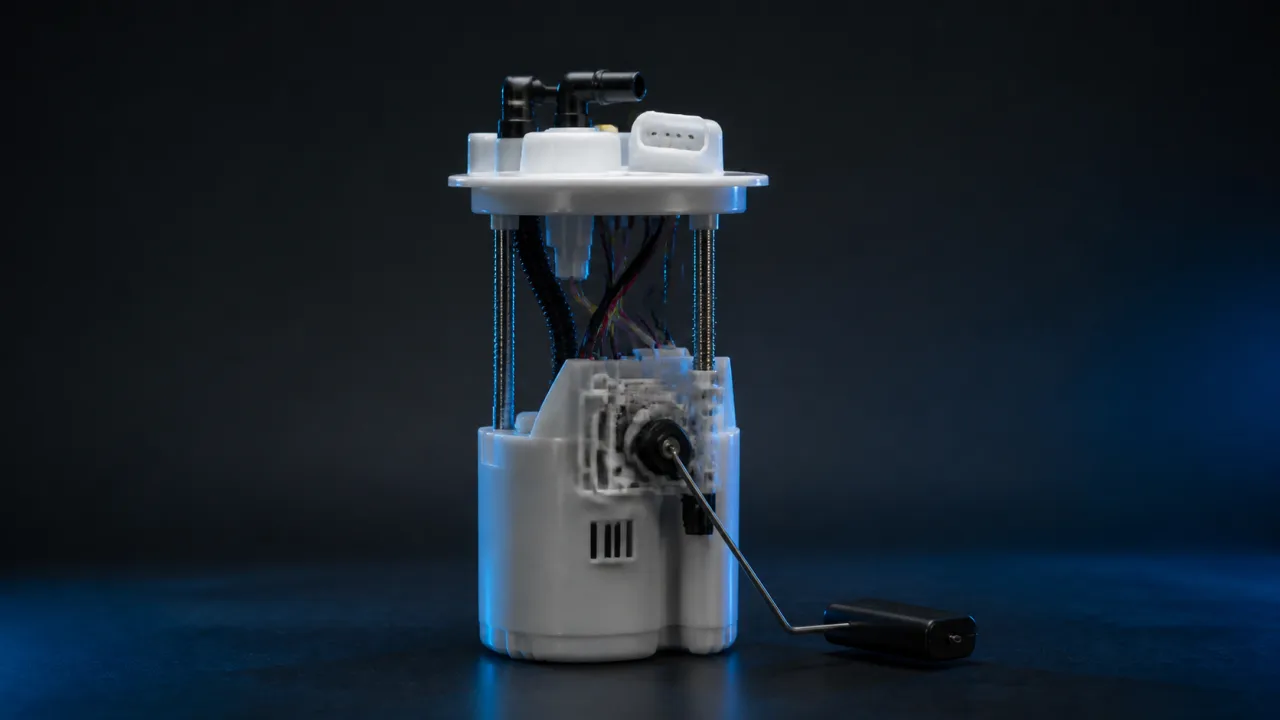
A fuel tank is replaced after impact damage, corrosion, a failed seam, or contamination. It is a straightforward part in fitment terms, but it carries two considerations that most parts do not: what is inside it, and how it is handled.
Safety first
Fuel tanks retain vapour long after they are drained, and fuel vapour is the hazard rather than the liquid. A tank that looks and feels empty can still be dangerous. Never cut, grind, weld or apply any heat source to a fuel tank. Removal and installation involve fuel lines, vapour lines and electrical connections, and should be done by a qualified technician following the vehicle's procedure with the fuel system depressurised.
If you smell fuel, or see a fuel leak, stop driving and have the vehicle recovered rather than continuing.
Internal condition is the whole story
The outside of a tank tells you little. What matters is what is inside, because anything in there ends up in your fuel pump, filter and injectors:
- Rust, on a steel tank - especially one that sat partly full for a long period.
- Debris and sediment from a degraded pump or from fuel that has gone stale.
- Residue from a previous contamination event - the very thing that caused the donor vehicle to have work done.
- Damaged baffles, which can cause fuel starvation under cornering or braking.
Ask for photographs taken inside the tank through the sender aperture, and ask whether the tank has been cleaned and how. Ask why the donor vehicle was dismantled, since a tank from a fuel-contamination repair is exactly what you do not want.
Plastic versus steel
Most modern tanks are moulded plastic, which does not rust but can deform, crack at mounting points, or be damaged by impact. Check the mounting straps' bearing surfaces, the neck, and every threaded insert. Plastic tanks can also swell slightly with age; a badly distorted tank may not sit correctly on its straps.
What is included, and fitment
Confirm whether the pump and sender unit, the lock ring and seal, the filler neck, the straps and any vapour valves are included. Plan on a new sender seal or lock ring gasket regardless, since these are commonly single-use. Tanks vary by drivetrain, body style, engine, emissions equipment and market. Confirm the part number against your VIN through a VIN-based request.
If the tank is being replaced because of a pump failure, read our fuel pump symptoms guide as well - a failing pump often leaves debris behind that the new tank must not reintroduce.
Before you commit
Confirm the part number, the internal condition, whether it has been cleaned, and what is included. Our 30-day limited warranty (up to 90 days on select parts, where your quotation says so) covers the part itself, not labour, installation, diagnostics or any other repair cost. Returns must be requested within 7 calendar days of delivery and need a written RMA from us before anything is sent back.
Use the fuel tank quote page or the part request form with your VIN.