Harsh shifting, a transmission stuck in one gear, limp mode, or a transmission warning can make it feel like your whole gearbox has failed. Sometimes it has—but on many modern vehicles the problem is the transmission control module (TCM), the computer that tells the transmission when and how firmly to shift. Diagnosing the module before replacing a complete transmission can save thousands. Once the fault is confirmed, a correctly matched used TCM can be a cost-effective repair, provided you plan for the required programming.
What the TCM does
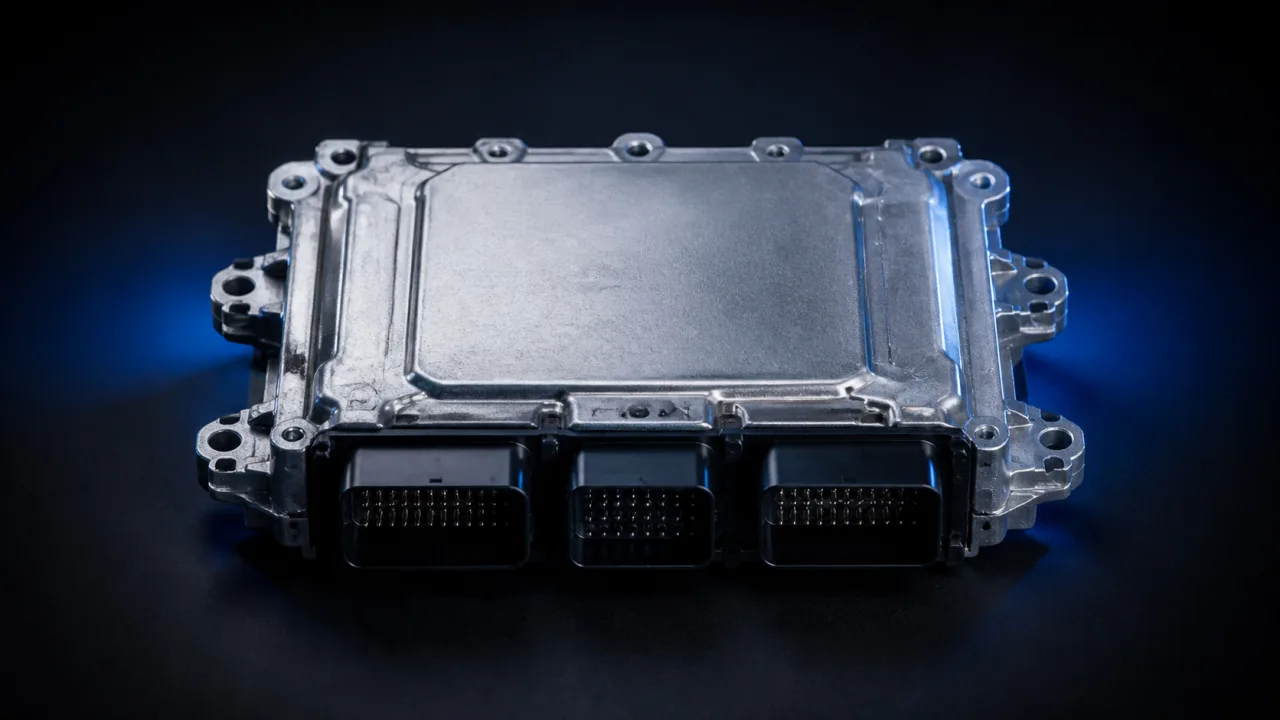
The TCM reads vehicle speed, throttle position, engine load, transmission temperature, gear position, and sensor signals. It then commands shift solenoids, line pressure, torque-converter lockup, and adaptive shift behavior. On some vehicles it is a separate metal or plastic module. On others it is combined with the engine computer and may be called a PCM, ECM, or powertrain control module.
Because the TCM controls transmission behavior, its failure can look very similar to a worn mechanical unit. That is why a useful diagnosis comes before buying anything.
Common bad TCM symptoms
- Harsh, delayed, or erratic shifts. The car may bang into gear, hesitate before shifting, shift at the wrong speed, or hunt between gears.
- Limp mode or a transmission stuck in one gear. Many vehicles default to a single safe gear to prevent damage when the control system detects a serious fault.
- No shift, no reverse, or intermittent operation. An electrical fault can appear and disappear with heat, vibration, moisture, or a poor connector connection.
- Transmission, check-engine, or service warning light. Codes in the P0700 family can tell the engine computer that the TCM stored a fault. Codes alone do not prove the module is bad, but they direct proper testing.
- No communication with the TCM. A scan tool may not communicate with the module because of a failed TCM, blown fuse, damaged wiring, weak ground, or network problem.
TCM vs. transmission vs. valve body: diagnose before you buy
A TCM is not automatically the answer to every shift problem. Low or burnt fluid, worn clutch packs, failing solenoids, damaged wiring, a bad speed sensor, or a faulty transmission valve body can produce similar symptoms. A competent shop should read all powertrain codes, inspect fuses and grounds, verify live sensor data, check harness/connectors for corrosion, and confirm transmission fluid condition before condemning the module.
This matters because a generic code such as P0700 is a request to inspect the transmission-control system—not a diagnosis of a failed TCM. Replacing a module without testing can leave the original fault untouched and create programming costs on top of it. If the repair shop is evaluating the hydraulic control section, see our transmission valve body diagnosis and fitment guide for the distinct questions to ask.
Does a used TCM need programming?
Often, yes. Many vehicles require the replacement module to be flashed with the correct software calibration and paired to the vehicle identification number (VIN). Some also require an immobilizer/security procedure and an adaptive relearn after installation. A few applications can be plug-and-play, but never assume that based only on an online listing.
Before buying, ask the supplier and your programmer or repair shop:
- Does this exact application require VIN programming, cloning, or a security reset?
- Can the shop program a used module, or does it require a new/virgin unit?
- Is the TCM separate from the ECU/PCM, or integrated into it?
- Will the transmission need an adaptive relearn or road-test procedure after programming?
Used TCM cost versus replacing a transmission
TCM pricing depends on whether the module is standalone or integrated, the exact hardware and calibration, programming requirements, condition information, freight, and the diagnosed repair path. Diagnosis and programming are separate services. Compare a configuration-specific module option with repair of the original or the other confirmed repair paths only after the fault is identified.
Do not compare only part prices. A cheap module that cannot be programmed for your vehicle, or has the wrong hardware number, is not a bargain. Get the diagnostic finding, programming plan, part number, shipping, and warranty in writing before you order.
How to buy the correct used TCM
Match the module by its exact hardware and software part numbers, not only the vehicle year and model. Manufacturers can use multiple calibrations in the same model year. Use these checks:
- Part number and suffix. Photograph the label on your original module, including every suffix and revision letter.
- Connector count and pin layout. A plug that looks close can still be wrong.
- Transmission and engine combination. Calibration depends on the exact transmission, drivetrain, engine, and sometimes axle ratio.
- Standalone or integrated design. Verify whether you need a TCM alone, a PCM, or another combined controller.
- Programming plan. Confirm who will flash, clone, or relearn the module before installation.
The safest route is to request a VIN-matched quote and include a clear photo of the original module label. If the diagnosis points to a mechanical failure instead, review the bad transmission symptoms guide before ordering a major part.
Find the right transmission control module
When testing confirms the controller is at fault, a matched used TCM can restore normal shifting at a fraction of a complete transmission replacement. Send your VIN, original part number, and any diagnostic codes through our part request form to compare compatible options and confirm programming needs before you buy.
Not sure whether your part needs software work at all? Our guide to which used car parts need programming or coding sorts parts into tiers and explains who can actually do the work.