Quick answer: Make sure the strut is what failed — a worn upper mount and bearing makes very similar noise, and the bounce test is a screen, not a verdict. Then choose between a complete assembly and a bare strut, because that changes the labor as much as the part, and book an alignment into the same visit. Review strut fitment or get a VIN-based quote.
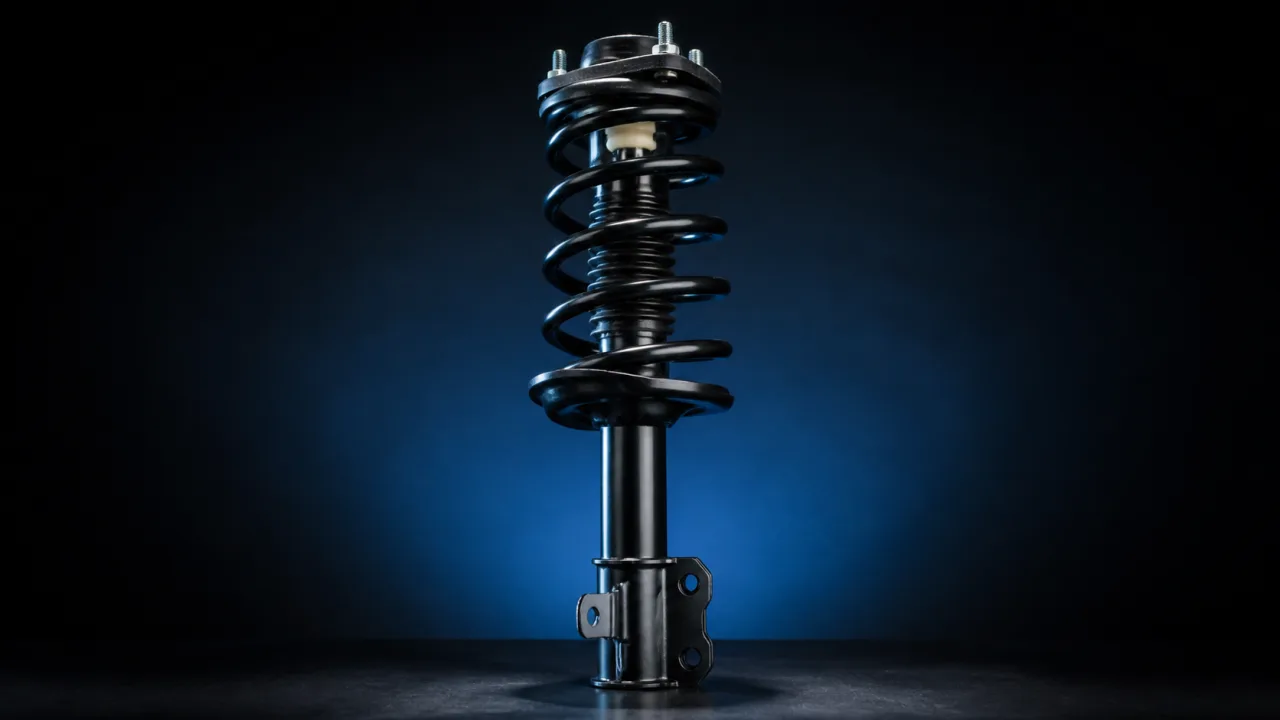
Struts combine the shock absorber and a structural suspension component, supporting the vehicle's weight and keeping the ride smooth and controlled. When they wear out, handling and braking suffer. A used strut assembly is an affordable way to restore a solid ride.
Signs of worn struts
- Bouncy, floaty ride or excessive body roll in corners
- Nose-dive when braking or squat when accelerating
- Clunking or knocking over bumps
- Uneven or "cupped" tire wear
- Fluid leaking down the strut body
What a used strut costs
Used struts are an economical repair, and complete "quick strut" assemblies (strut + spring + mount) save labor. Struts are best replaced in pairs (both front or both rear) so the suspension is balanced side to side.
How to buy the right one
- Match by VIN: ride height, spring rate and mounts vary by trim and suspension package — search by VIN for an exact match.
- Prefer complete assemblies to avoid spring-compressor work.
- Check the rod and body for pitting, leaks or bent shafts.
- Get an alignment after installation.
Is it the strut, or the mount on top of it?
The driveway bounce check relies on judgment rather than measurement: a working damper lets the body rise once and settle, but confirm any read with a visual check for leaks and a road test.
The part blamed wrongly most often is the upper strut mount and its bearing, which sits on top of the strut and lets the assembly rotate as you steer. A useful split: noise mainly during slow, large steering inputs — parking, a U-turn — while straight-line driving stays quiet points at the mount bearing, and a wheel that stops returning to center on its own is a bearing signature, not a damper one. A worn mount can also shift camber and wear tires unevenly — exactly what drivers assume a dead strut is doing.
Struts fade silently, too. Monroe's testing found original gas-charged units measurably degraded by 50,000 miles with no visible wear, and worn ride control hurts steering, stopping and stability long before anything leaks. If a corner clunks but the ride is still controlled, have the control arm, wheel hub and sway-bar links inspected first.
Complete assembly or bare strut: what changes at the shop
A complete ("quick") strut arrives pre-built with housing, damper, spring and upper mount, so it bolts on with no coil spring to compress; shops generally quote less time for it than for a bare strut, where the spring has to be transferred off the old unit. The part costs more and the labor less, so compare the two as one installed number, not two part prices.
One caveat that does not apply to a new quick strut: on a salvage assembly the spring, mount and bearing came off the donor car with the same age on them as the damper, so ask what the unit you are quoted contains. A bare strut means reusing your own spring and mount, and that disassembly involves a compressed coil spring — shop work, never a driveway job.
Budget for the alignment, not just the part
The strut's lower end bolts to the steering knuckle through holes with a little lateral play, so it can go back slightly differently than it came out; camber especially is affected, with toe and caster too, and off spec that means uneven tire wear and a car that is harder to hold straight. If your trim has electronically adjustable damping, a passive strut is not a substitute — the strut fitment page shows how to spot it. See how used-part pricing is built.
Find a used strut assembly
Review strut-assembly fitment or request a VIN-based quote so the correct position, suspension configuration, condition, shipping, warranty, and final pricing can be confirmed before purchase.