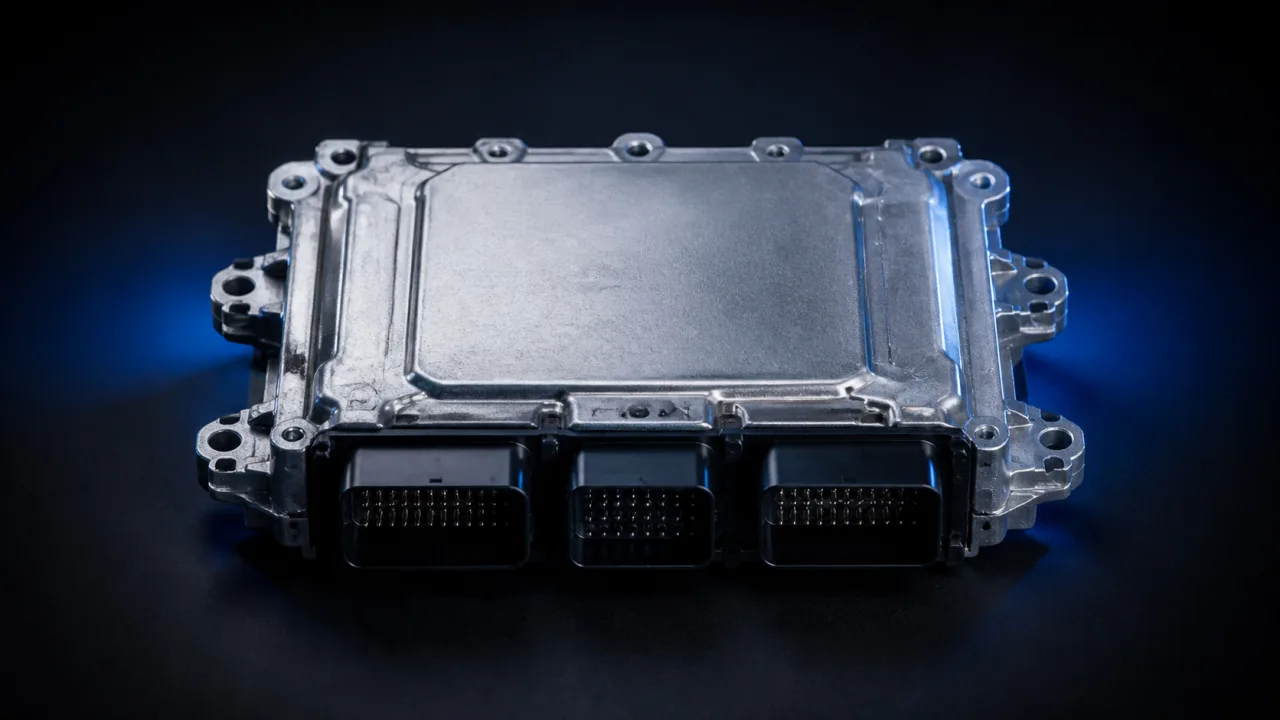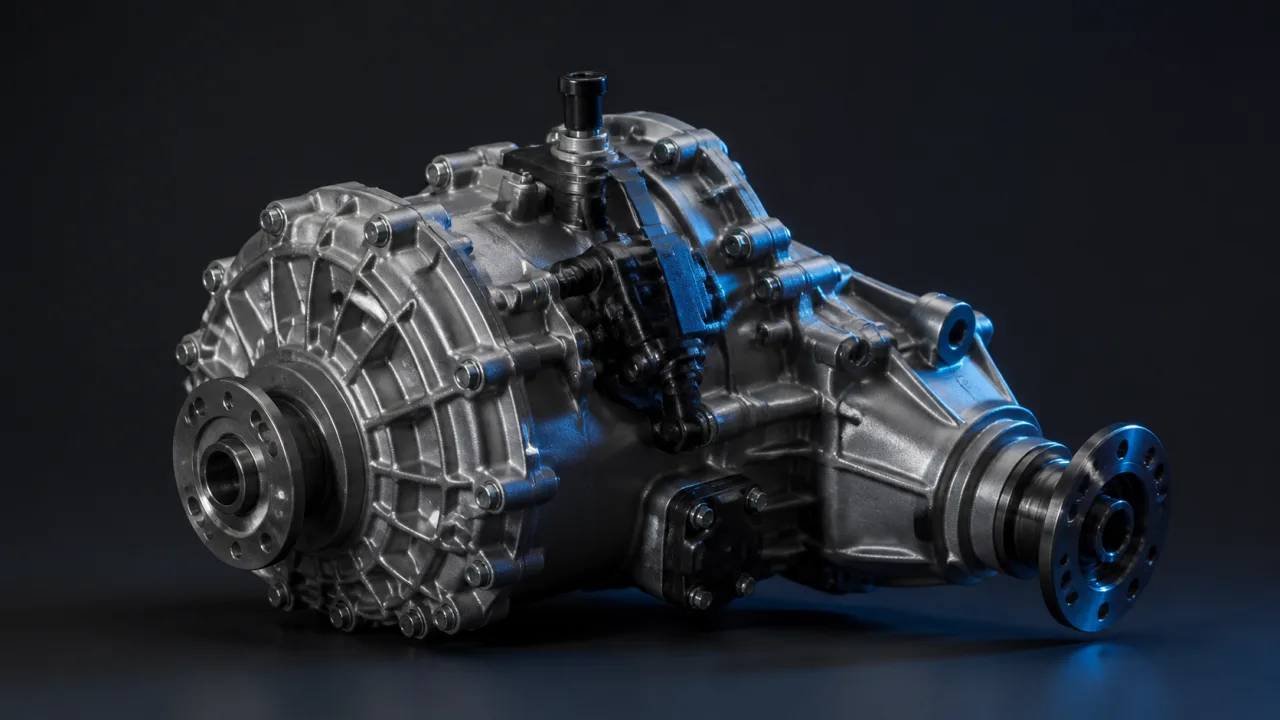
A transfer case sends power from the transmission to the front and rear axles on four-wheel-drive and many all-wheel-drive vehicles. When it starts grinding, leaks fluid, refuses to engage four-wheel drive, or lights up a 4WD warning, the repair can be expensive — but a tested used transfer case is often the sensible alternative to a new or remanufactured unit. The important part is fitment: unlike a simple bolt-on accessory, a transfer case must be matched by its ID tag or model number, not only by year, make, and model.
What a transfer case does
On a traditional part-time 4WD truck or SUV, the transfer case lets the driver select two-wheel drive, four-high, and often four-low. On an AWD vehicle, it continuously distributes torque between the axles. Some use a chain inside the case; others use gears and clutch packs. Many modern units use an electronic encoder or shift motor instead of a floor lever.
That difference matters when shopping. A case that physically bolts up can still be wrong if it has the wrong shift system, connector, low-range setup, or internal ratio for your drivetrain.
Bad transfer case symptoms
- Grinding, growling, or a whine from the center of the vehicle. A stretched chain, worn bearings, low fluid, or damaged gears can make noise that changes with road speed or when 4WD is engaged.
- 4WD will not engage, or slips out of gear. A failed shift motor, encoder, linkage, fork, or internal wear can leave the vehicle stuck in 2WD or make it jump out of 4HI/4LO.
- 4WD/AWD warning light or service message. Electronic cases monitor shift position. A warning can point to a sensor or motor, but it can also signal a mechanical problem inside the case.
- Fluid leak under the middle of the truck or SUV. Leaks from the case halves, input seal, output seal, or drain/fill plugs lower the fluid level and accelerate bearing and chain damage.
- Binding, hopping, or clunking while turning. A drivetrain that feels wound up or jerks on tight turns needs diagnosis. It may be normal driveline bind from using part-time 4WD on dry pavement, but it can also indicate a transfer-case, clutch-pack, or differential issue.
Do not confuse the transfer case with the transmission or differential
The transmission selects gear ratios for the engine. The transfer case routes that power to one or both axles. A differential then lets the wheels on an axle turn at different speeds. Their noises can overlap, so have the problem diagnosed before ordering a high-value part. A vibration under acceleration can also come from a worn driveshaft or U-joint rather than the case itself.
Repair the shift motor or replace the whole case?
Not every 4WD failure means the complete unit is bad. If the case is quiet, fluid is clean, and a scan points to an electronic actuator, the transfer case shift motor or encoder can be the lower-cost repair. Internal grinding, metal in the fluid, a damaged chain, cracked housing, or a unit that will not hold a range usually calls for a complete case. A shop can confirm the cause by checking fluid condition, shift commands, actuator operation, and driveline play.
What a used transfer case costs
Transfer-case pricing depends on the exact tag/model number, low-range or AWD design, electronic equipment, condition information, included motors or sensors, freight, and installation access. Installation can also vary with rust, skid plates, and component transfer. Get a configuration-specific part quote and an all-in installer estimate before comparing used, remanufactured, and new paths.
A tested used unit is often compelling for a common truck or SUV with a known-good donor. A remanufactured unit can make more sense when you plan to keep a vehicle for years and the longer warranty justifies the extra cost. Either way, the wrong tag number can turn a bargain into a return and extra labor.
How to match the right used transfer case
Start with the ID tag on your existing case. It may show a manufacturer/model number, assembly number, ratio, barcode, or build code. Photograph the tag before you request quotes. Then match these details:
- Transfer-case model and tag number. This is more reliable than year/make/model alone, especially during model-year changes.
- Shift type. Manual lever, electric push-button, electronic encoder, and active AWD systems are not interchangeable.
- Input and output splines, flange style, and sensors. The transmission connection and front/rear driveshaft outputs must match.
- Low-range and drivetrain configuration. Confirm 2-speed versus single-speed AWD, 4WD versus AWD, and applicable drivetrain calibration.
- What is included. Ask whether the shift motor, encoder, speed sensors, yokes, and mounting hardware are included or transferred from your original unit.
Your VIN is still valuable for narrowing the options, but the tag is the final fitment check. Request a VIN-matched quote and attach a clear photo of the transfer-case label if you can.
Used transfer case buying checklist
- Ask whether the donor unit was tested through every available range.
- Confirm the case is free of cracks, stripped threads, and damage around the mounting ears.
- Inspect or ask about output-shaft play, seals, fluid condition, and chain noise.
- Verify the part number, tag, connector count, and shift-motor configuration before payment.
- Get the warranty, return terms, freight cost, and any core charge in writing.
Find the right transfer case
A transfer-case problem does not automatically require a dealer replacement. Once the failure is diagnosed and the ID tag is confirmed, compare the configuration-specific used, rebuilt, remanufactured, and new options. Send your VIN and tag details to request a compatible quote and review the exact terms before you buy.